
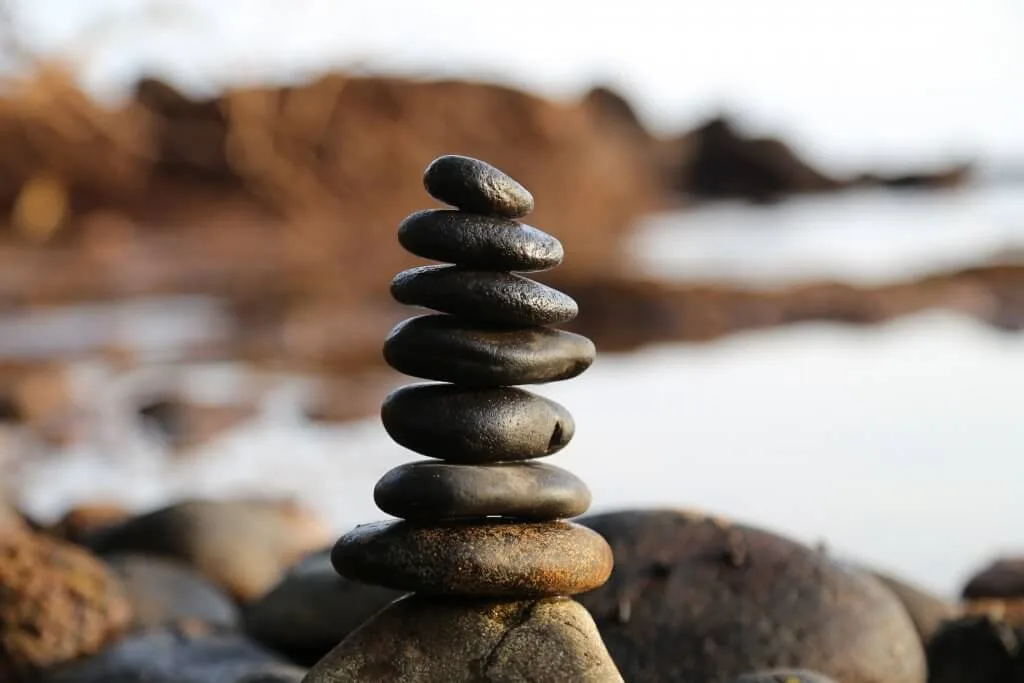
Yoga is a great tool for cultivating better balance. Practicing yoga on a regular basis teaches us how to control our body’s gravity center, and hence enables us to have better balance. The more balance we are able to cultivate, the longer we will be able to stay in each pose, and the stronger our body will become. This article will share 5 yoga poses that are great for improving your balance. It is recommended to practice these postures on a regular basis to achieve better results. There are step-by-step instructions included on how to get into each pose safely. If you are interested to read more about how to improve your balance and focus, be sure to read our “Improve Your Focus and Concentration” article.
5 Best Poses to Practice to Improve Your Balance
1. Tree Pose – Vrikshasana

How to Get into this Pose:
- Start in mountain pose at the top of your mat
- Shift your weight to your left leg, and plant your left toes firmly into your mat
- Gaze at one spot for better balance, and place your right foot on your inner thigh (please see modifications below for other variations)
- Keep your core engaged, your hips squaring forward, and bring your hands to your heart.
- Continue to press your right foot into your thigh, while simultaneously pressing your left thigh into your foot – this will create an opposite motion and will help with your balance
- Take a deep inhale, lift your arms up towards the ceiling
- On your exhale, open up your arms into your full tree pose expression
- Stay here for 8-10 deep breaths through the nose, and slowly bring your right knee forward and release it down
- Repeat the same steps on the opposite leg
Modifications:
- If you are unable to place your foot on your inner thigh, simply place it on your shin, ankle, or foot.
- Keep your hands at heart center instead of reaching the arms up, if your balance is off
- Use a wall for extra support
Benefits of this Pose:
- Helps to cultivate better balance, focus, and concentration
- Grounding pose that soothes the nervous system and helps to keep your rooted
- Stress and anxiety relieving
- Stretches the knees, and thighs and strengthens the ligaments of the feet
- Strengthens the legs
2. Dancer’s Pose – Natarajasana

How to Get into this pose:
- Start in mountain pose, at the top of your mat
- Bring your left arm up, and your right arm back towards your foot.
- Bend your right knee, and grab your right ankle with your right hand
- keep your hips squaring forward and your shoulders relaxing down
- On your inhale, lengthen and kick your right leg further up.
- As you exhale, begin to lean more forward.
- Keep your gaze forward on one spot (this will help you stay balanced).
- Continue to kick your right leg back, while reaching your left arm forward.
- To come out, slowly release your leg down and return back to standing.
- Repeat the same steps on the opposite side.
Modifications:
- Use a wall for extra support
- Don’t kick up your back leg – keep it aligned with your standing knee
- Use a strap or rolled up towel for extra length
Benefits of this Pose:
- Helps to build mental focus and concentration
- Builds full-body strength and helps with flexibility and coordination
- Stretches the shoulders, hips, chest, thighs, ankles and the abdominal muscles.
- Creates greater mobility in the spine and hamstrings.
3. Airplane Pose – Dekasana

How to Get into this Pose:
- Start in mountain pose at the top of your mat
- Engage your core and shift your weight to your left leg
- Begin to fold forward (keep that core tight), and simultaneously lifting your right leg up
- Internally rotate your right leg in, so that the hips are both facing down towards the ground
- Keep you legs leveled to the floor (remember it’s not about how high your leg can go, but rather keeping your body aligned)
- Bring your arms alongside your body with the palms facing down, and keep your spine in a straight line with your legs
- Stay here for 5-8 deep breaths through the nose, flexing through your back foot
- Make sure you are gazing on one spot the entire time, as it will help you to stay balanced
- To come out, lower your right leg down and return into standing position
- Repeat the same steps on the opposite side.
Modifications
- Use a wall for extra support
- Keep your hands on the ground in front of you if balance is off
- Place blocks under your hands and rest your hands on top for extra support
Benefits of this Pose:
- Cultivates balance and focus
- Strengthens and tones the legs, knees, calves, ankles and core
- Promotes better concentration
4. One Legged Mountain Pose – Eka Pada Tadasana

How to Get into this Pose:
- Start in mountain pose at the top of your mat
- Shift your weight to your left leg and firmly plant your left foot on your mat
- Engage your core, and bring your right knee up to your chest
- Inhale, bring your arms up towards the ceiling, and spread your fingers out (facing up).
- Exhale, extend your right leg out in front of you- keeping your foot flexed
- Make sure your hips are facing forward, your core is tight, shoulders are relaxing down from the ears, and arms are actively reaching up
- Stay in this position for 5-8 breaths, and slowly release the leg down
- Repeat the same steps on the opposite side.
Modifications:
- Keep your knee bent (instead of extending it forward)
- Use a wall for extra support
- Keep your hands on the hips instead of reaching them up
Benefits of this Pose:
- Strengthens and stretches the legs, core, calves, thighs, and ankles
- Helps with improving balance and concentration
- Improves posture
5. Chair Pose on Tiptoes – Utkatasana

How to Get into this Pose:
- Start in mountain pose at the top of your mat
- Bend your knees, and lower your hips down
- Extend your arms out in front of you, and keep gazing on one spot to help you with balance
- Keep your back straight and shoulders away from the ears
- Tighten your core, inhale and begin to lift your heels off the floor.
- Exhale, sink your hips further down.
- Breathe here for 5-8 deep breaths, and slowly lower your heels down and return back into standing position.
Modifications:
- Use a wall or chair for extra support
- Stand against a wall and lower down into your chair pose if balance is off
- Keep your heels on the mat if you are unable to lift them
Bottom Line
Having better balance helps enables us to become more coordinated, centered and stronger. It can greatly benefit us in our yoga practice and fitness routines. I hope you found this article resourceful and helpful in helping you navigate through the poses. As mentioned above, for best results, it is recommended to practice these on a daily basis (or as much as you can). It won’t take much time out of your day, but can make a tremendous difference in your yoga practice. Please let me know in the comments section, if there are any other specific topics you would like for me to cover in the next few blog posts!
With Love,
Yana Thompson