
What happens to the body Postpartum
Many new moms are naturally eager to get back to the gym and drop the “baby weight”. First, I would like to start with saying, beautiful ladies – you had just created a miracle with your body! If that’s not a cause to celebrate, I don’t know what is! Postpartum Yoga is a great way to gently and safely get back into your physical activity and help your body heal and strengthen.
A study made on postpartum women has revealed that a big part of women experience diastasis recti, which is when the right and left abdominal muscles separate. This takes some time to heal after giving birth. In addition, many new moms in another study have shared that they experienced new aches and pains in areas they haven’t necessarily experienced prior to giving birth. This is also normal, I mean if we only think about how much tension actually accumulates from even nursing your child or carrying the baby for extended periods of time everyday, then we can gather where that tension may accumulate. The neck, the torso, the back, the shoulders, lower back, hips and all in addition to weakened pelvic floor muscles. This is why postpartum yoga is a wonderful, gentle way to get back into your body, build and strengthen your core and pelvic floor muscles.
Keep reading to find out what the benefits for practicing postpartum yoga are.
Benefits of Postpartum Yoga
- Can help with sleep deprivation and overall better sleep
- Yoga can help you balance your hormones during postpartum
- Helps to calm and ease the nervous system
- Helps to rebuild strength in the core and pelvic floor muscles in a safe and gradual way
- Can greatly help in reducing anxiety and postpartum depression
- Help to rebuild strength in the back to support the spine and fix posture
- Stimulates cell growth
- Help remove emotional blocks and tensions
- Helps to maintain overall better flexibility, well-being and happiness
What to avoid during postpartum…
It is also important to remember for postpartum women to not overstretch or overextend their stomachs, as this can hinder the process of healing and may contribute even further to separating the abdominal muscles. Rather, when practicing each pose, bring you attention to bringing the tummy inward (or in other words ‘hugging’ the core in). This will promote the core to slowly build strength but more importantly will protect the stomach from overextending and stretching further.
I would recommend avoiding doing deep twists, intense core exercises and heart-opening poses (such as bow pose, camel and so forth) in order to allow your stomach, pelvic floor and core muscles to heal without interruption. Lastly, I cannot emphasize the importance of being gentle, kind and compassionate to yourself. It can be very frustrating to return to your yoga practice after birth and not be able to do the same things as you were able to do before. Remind yourself that it’s all temporary and the more gentle and kind you are to your body, the faster you will heal and be able to return back to your regular practice!
Best Poses to Practice for Postpartum
Shoelace pose
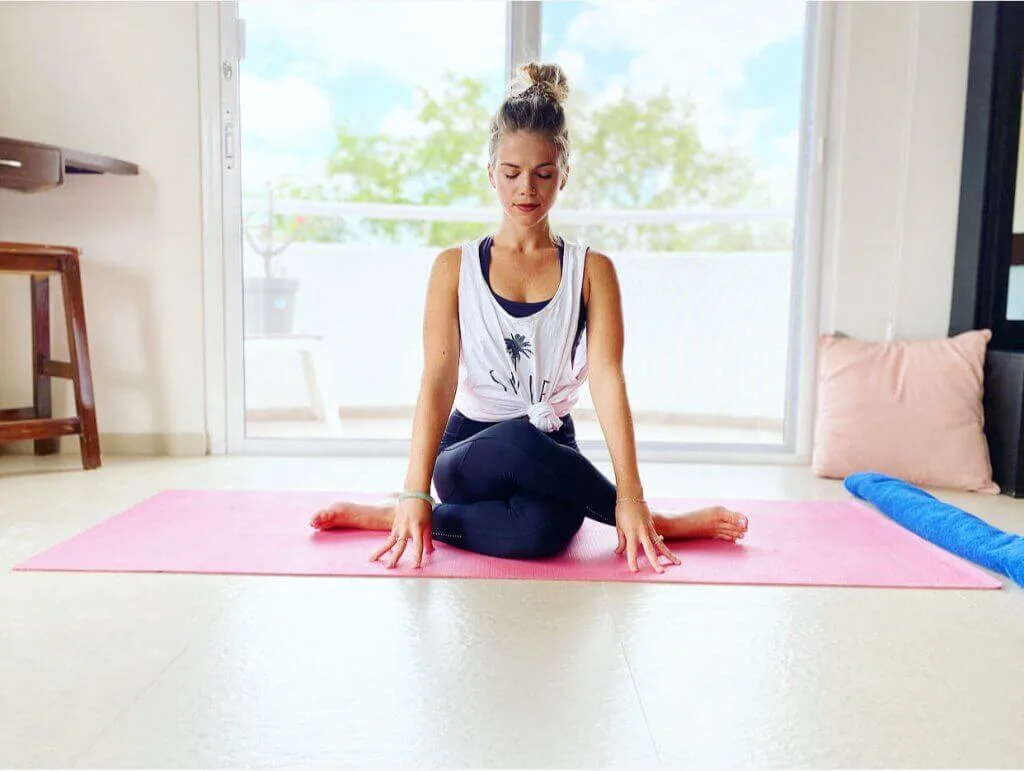
From a comfortable seated position, bring your right knee over your left knee (stacking them on top of one another). Make sure both of your sitting bones are on the ground. Take an inhale through your nose, and lengthen through your back. You should already be feeling a deep stretch on your right hip. If this is the case, you can just stay where you are and focus on your breathing. If you wish to go a little bit further. Use your inhale to lengthen through the spine and your exhale to walk your hands forward.
Modifications:
- Bring a cushion or bolster underneath your sacrum for extra support.
- Sit in a cross legged pose if you are unable to stack your knees
Supported Child’s Pose

Place a rolled up towel or blanket at the back of your mat. Start in a tabletop position, and place your ankles on top of the blanket or towel. Open up your knees mat distance apart and begin to walk your hands forward, until you are able to reach your forehead on the ground. Breathe here for 5-7 deep breaths. This is a wonderful way to gently strengthen the pelvic floor muscles and core.
Modifications:
- Place a bolster in front of your chest, and rest your chest on the bolster or pillow. This is a more gentle variation
- Place a block where your forehead would come down and rest your forehead on the block
Supported Bridge Pose

This is a very gentle variation for a bridge pose. Remember, after giving birth your body is in need of time to heal. One thing that hinders the body from healing is engaging in deep back bends, deep twists and overextending and stretching the stomach. When practicing postpartum yoga, always try to ‘hug’ your belly inwards. This will help to protect your core and allow it to heal properly. To get into this pose, place a cushion beside you and make your way on your back. Gently elevate your hips and place the cushion or bolster underneath your sacrum. If you want to challenge yourself a little bit, you may lift your hips just a couple of inches off your cushion. Please make sure you are ‘hugging’ the core in.
Legs Against the Wall Pose

Bring yourself close to a wall, and lift your right leg up then left and lean them against the wall. You can elevate your hips gently and place a cushion or bolster underneath the hips for extra support. Stay here for a few minutes if time permits. This is a great pose in helping you to reduce swelling from the knees, ankles and legs. It also aids with reducing anxiety, depression and helps with sleep deprivation. A pretty amazing pose, isn’t it? Come out in the same way you came into this pose. First, remove the pillow from under your sacrum and then bend your right knee, then your left and lower them down.
To Conclude…
Postpartum yoga is a wonderful way to take care of the mind, body and spirit postpartum. If this is something you are interested in further exploring, we have free online postpartum yoga classes designed specifically for new moms! These postnatal yoga classes will help you to gently return back to your yoga practice and help you safely strengthen the core and pelvic floor muscles.
Follow my Full FREE Yoga session for new moms