
How to Modify Yoga Poses Using Yoga Blocks
Yoga Blocks are a great prop to include in your yoga practice, whether you’re a beginner or advanced yoga practitioner. These props enable you to get into each yoga pose without compromising your alignment, which is very important in yoga. The following article will show 6 ways you can modify your yoga practice using yoga blocks for length.
Seated Forward Bend (Paschimottanasana)

Many people struggle with tight hips (including myself). This is due to tightness in the lower back and hamstrings. If you struggle with forward folds, placing a block under your hips can greatly help to keep you in proper alignment, while enabling you to go deeper into the pose. I highly encourage modifying this pose with yoga blocks, as many people compromise their alignment, and don’t experience the full benefits of this posture.
How to Get into this Pose:
- Start in a seated position, with your legs extending forward.
- Place a block under your hips (vertically or horizontally, depending on how much extra length you require).
- Keep you back straight, take a deep inhale and reach your arms up.
- On your exhale, reach the arms forward and reach for your toes.
- Stay in this pose for 8-10 breaths through the nose, and slowly roll yourself back up.
Modifications:
- If you are unable to reach your toes, bend your knees as much as you need to. The important part here is to keep your back straight.
- You may also choose to use a strap in addition to the block. Place it on the arches of your feet, and reach forward while keeping your back straight.
Benefits of this Pose:
- Deeply stretches the entire back side of your body (from the heels to the neck)
- Calms the nervous system
- Relieves lower back stiffness and tension
- Stimulates the internal organs
- Increases circulation to the pelvic organs
Modified Downward Dog (Adho Mukha Svanasana)

Some people may struggle to get into the full expression of downward dog, due to tension and stiffness in the lower back and hips. If you are one of those people, consider placing two yoga blocks under each hand. This will add length to your palms, and will enable you to get into your downward dog with more ease, and without compromising your alignment.
How to Get into this Pose:
- Start in a table top position on all fours.
- Press into your palms, curl your toes, tuck your belly in and lift your hips up towards the ceiling.
- Place your hands on your yoga blocks
- Keep your fingers facing forward, and your elbowing rotating slightly inward.
- Stay here for 8-10 breaths through the nose, while keeping your shoulders away from the ears, and your chest moving closer towards your thighs.
- To get out of this pose, lower your knees on the mat first, remove the yoga block from under your palms, and return back to your neutral table top position.
Modifications:
- If you are unable to keep your legs straight while using the yoga blocks, bend your knees and keep them bend as much as you need to.
Benefits of this Pose:
- Lengthens the hamstrings and calves
- Tones the core muscles
- Stretches the spine and strengthens the back, arms, and shoulders
- Brings blood flow to the brain
- Helps to relieve tension and aches from lower back
Modified Standing Forward Fold (Uttanasana)

If you have a hard time with seated forward bends, as mentioned above, chances are you also find standing forward folds challenging as well. A great way to modify and add length to this pose is by adding two blocks (vertically or horizontally, depending on what you require) under your hands.
How to Get into this Pose:
- Start in mountain pose at the top of your mat, with your feet hip distance apart.
- Take a deep inhale, bring your arms up, and on your exhale, fold forward with a slight bend in the knees.
- Bring your yoga blocks under your hands (vertically or horizontally), and rest your palms on top.
- Stay in this pose for 8-10 deep breaths through the nose
- To come out, bring your hands on your hips and slowly roll yourself up, with your head coming up last.
Benefits of this Pose:
- Helps to relieve headaches, stress, anxiety and fatigue
- Stretches and lengthens hamstrings and calves
- Can help with relieving tension in the neck and shoulders
Half Moon (Ardha Chandrasana)
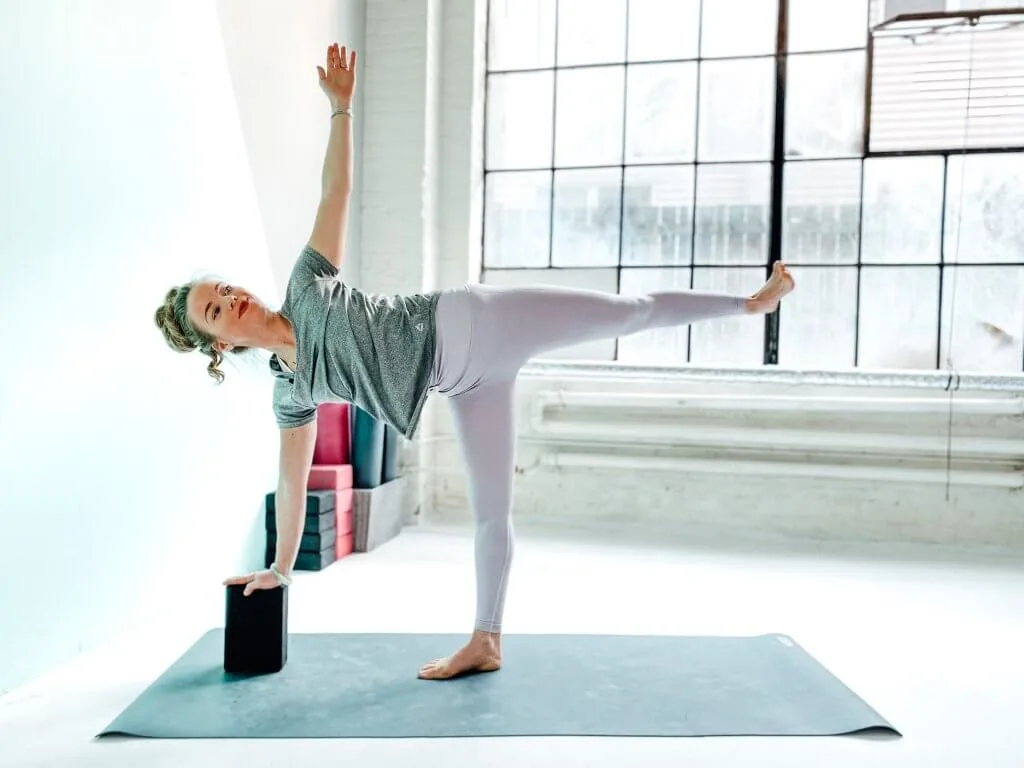
Half moon is a great pose with many benefits, however, sometimes when our balance is off, or we aren’t feeling as flexible, it’s hard to get into this pose without compromising our alignment. Placing a yoga block under your palm will add length and enable you to get into better alignment.
How to Get into this Pose:
- Start in mountain pose at the top of your mat.
- Step your left leg back, and rotate your front toes to face forward.
- Place a block 2-3 feet in front of you at the top of your mat
- Bend your right knee, and place your right hand on top of your block.
- Shift your weight forward, and with control lift your left leg off the mat.
- Squeeze your belly in, rotate the chest outward and imagine as though your standing in between two walls. This means rotating your left leg back, your right hip forward, tucking the tailbone under and squeezing the belly in.
- Stack your shoulders on top of one another, and bring your gaze up towards your left palm.
- Stay in this pose for 5-8 breaths through the nose.
- To come out of this pose, bend your front knee first and slowly return into a standing position.
- Repeat the same steps on the opposite side.
Modifications:
- Keep your gaze down if you are having trouble with balance
- Bring your left hand on your left hip, if you are unable to extend the palm up.
- Practice this pose against a wall, for extra support.
Modified Pigeon Pose (Eka Pada Rajakapotasana)

Pigeon pose is a great pose for relieving tension from the hips, however, at times can be difficult to get into, due to lack of mobility and flexibility in the hips. Placing a yoga block under the front hip can add length and help you get into this pose, without compromising your alignment.
How to Get into this Pose:
- Start in a table top position.
- Bring your left knee forward and parallel to the front of your mat
- Keep your hips facing forward, your shoulders relaxing down, and your belly tucked in.
- Place a yoga block under your left hip for extra elevation and support.
- Bring your palms in front of you, and stay in this position for 8-10 breaths.
- If you are able to lower your forearms on the mat into sleeping pigeon, go ahead and do so.
- To come out, press into your palms, lift your hips up and return back into your table top position
- Repeat the same steps on the opposite side.
Modifications
- Stay in an upright position, and do not go into your sleeping pigeon.
- Place a bolster under your back leg for extra elevation and cushion.
Benefits of this Pose:
- Stretches the glutes, hips, groins and psoas
- alleviates sciatic pain
- Stimulates the internal organs
Supported Bridge Pose (Setu Bandha Sarvāṅgāsana)

How to Get into this Pose:
- Start on your back, with the soles of your feet on the floor.
- Bring the back of your heels as close to your hips as possible, so you can touch the back of your heels with your finger tips
- Keep your palms on the floor beside you facing down. Take a deep inhale and while pressing your feet and palms into the mat, lift your hips up.
- Gently place a block under your sacrum in a position that is most comfortable for you.
- Continue to rest your head on the mat.
- Stay here for 8-10 deep breaths.
- To come out, first remove the block. Using your core, slowly lower your hips down, one vertebrae at a time.
Modifications:
- Place a bolster under your back, and rest your back on top if you are unable to lift your hips at this point of your yoga journey
- Place your block horizontally (on the flat side), to lower the elevation of the block. This modification is great for those who are unable to go into a deep backbend.
Benefits of this Pose:
- Promotes deep relaxation
- Calms the nervous system
- Helps to relieve anxiety and fatigue
- Can help with relieving headaches and migraines
- Stretch the shoulders and neck
- Improves digestion, respiration and circulation
- Can help with relieving back pains
Shop for Yoga Blocks

As you have seen above, there any many ways to incorporate yoga blocks in our practice. Yoga blocks are a great prop to include for both beginners or advanced practitioners, as they can help us get into each pose with proper alignment. The yoga blocks above are a great and affordable option, for those that might be looking to buy yoga blocks.
I hope you find this article helpful, and if you’re looking for additional articles about yoga, be sure to check out our Yoga for Beginners article!
Kind Wishes,
Yana Thompson